You are looking at
Dutch RepublicRepubliek der Zeven Verenigde Nederlanden
EuropeHeartland today: 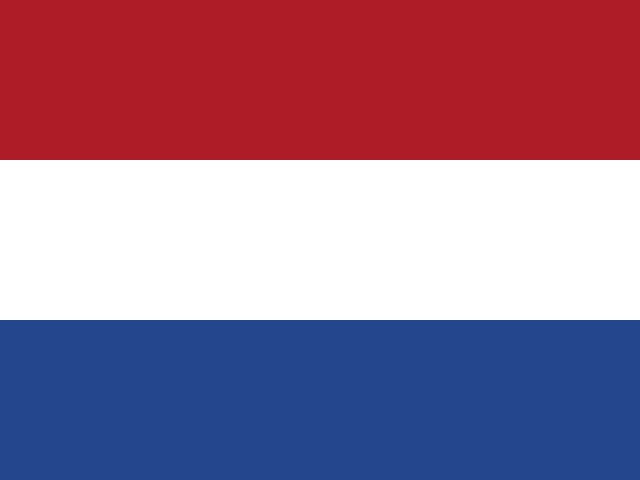 Netherlands
The start is dated to the Union of Utrecht in January 1579, which set up the United Provinces, or to the Act of Abjuration in July 1581, when they deposed Philip II. Wikidata uses 1581. The end, January 1795, is not in dispute.
Meanwhile…
- Ethiopian Empire
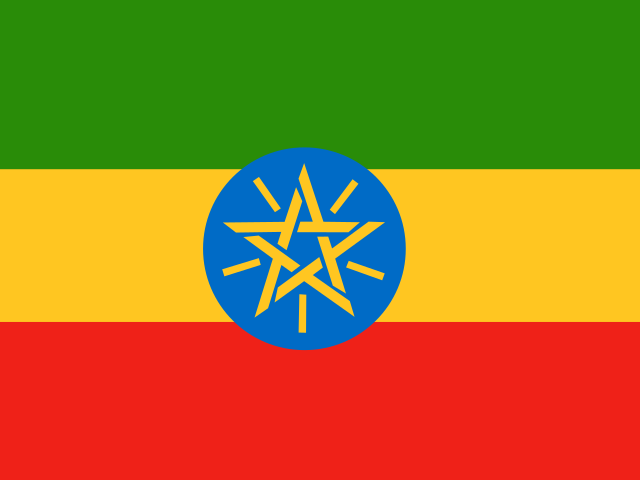 Africa ·
 Ethiopia's emperors traced their line to Menelik I, said to be the son of Solomon and the Queen of Sheba, and the 1955 constitution declared that the emperor descended from him without interruption.
Compare - Ottoman Empire
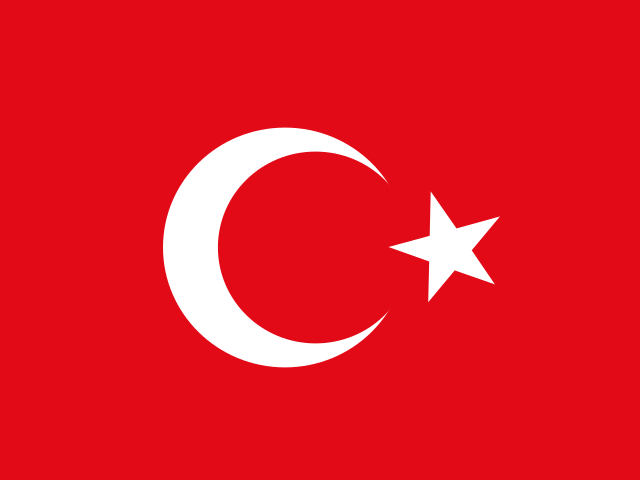 Middle East & Central Asia · Compare
 - Mughal Empire
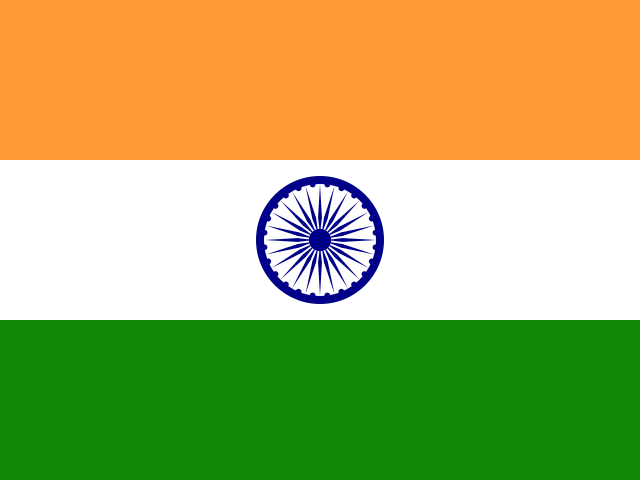
 South Asia ·
 The Taj Mahal took 17 years to build; its white Makrana marble came from Rajasthan and is inlaid with amethyst, coral, garnet, jade, lapis lazuli and turquoise.
Compare - Đại ViệtĐại Việt
 East Asia & Pacific · Compare
 - Qing dynasty清
 China · Compare
 - Maya civilization
 Mesoamerica · Oldest here
The Maya Long Count calendar tracks days in an unbroken count from a mythical starting point in 3114 BCE.
Compare
The republic of seven northern provinces that broke from Spanish rule in the Dutch Revolt. It ran two chartered trading companies, the East India Company from 1602 and the West India Company from 1621, with trading posts, forts and plantations in Asia, Africa and the Americas, some worked by enslaved people. It ended in January 1795, when French troops entered and the Batavian Republic replaced it.
Also alive at the same time
- Ming dynasty
- Qing dynasty
- Maya civilization
- Republic of Venice
- Kingdom of Scotland
- Holy Roman Empire
- Kingdom of France
- Kingdom of England
- Kingdom of Portugal
- Crown of Aragon
- Crown of Castile
- Hanseatic League
- Portuguese Empire
- Spanish Empire
- Habsburg monarchy
- Polish–Lithuanian Commonwealth
- British Empire
- Swedish Empire
- Kingdom of Prussia
- Russian Empire
- Kanem–Bornu Empire
- Mali Empire
- Ethiopian Empire
- Kingdom of Benin
- Kingdom of Kongo
- Oyo Empire
- Songhai Empire
- Ashanti Empire
- Ottoman Empire
- Safavid Iran
- Mughal Empire
- Maratha Empire
- Đại Việt
- Ayutthaya Kingdom
- Lan Xang
- Joseon
- Tokugawa shogunate (Edo period)
Key events
The provinces of the Union of Utrecht depose Philip II as their sovereign in the Act of Abjuration on 26 July
Sources
- Encyclopedia.com, "Dutch Revolt (1568–1648)": the provinces of the Union of Utrecht deposed Philip II as sovereign of the Netherlands in the Act of Abjuration (26 July 1581).
- Britannica, "Act of Abjuration": in 1581 the States General declared that Philip had forfeited his sovereignty over the provinces by persistent tyranny.
Also happening around
- Ming dynastyChina
- Maya civilizationMesoamerica
- Republic of VeniceEurope
- Kingdom of ScotlandEurope
- Holy Roman EmpireEurope
- Kingdom of FranceEurope
- Kingdom of EnglandEurope
- Kingdom of PortugalEurope
- Crown of AragonEurope
- Crown of CastileEurope
- Hanseatic LeagueEurope
- Portuguese EmpireEurope
- Spanish EmpireEurope
- Habsburg monarchyEurope
- Polish–Lithuanian CommonwealthEurope
- Kanem–Bornu EmpireAfrica
- Mali EmpireAfrica
- Kingdom of BeninAfrica
- Ethiopian EmpireAfrica
- Oyo EmpireAfrica
- Kingdom of KongoAfrica
- Songhai EmpireAfrica
- Ottoman EmpireMiddle East & Central Asia
- Safavid IranMiddle East & Central Asia
- Mughal EmpireSouth Asia
- Đại ViệtEast Asia & Pacific
- Ayutthaya KingdomEast Asia & Pacific
- Lan XangEast Asia & Pacific
- JoseonEast Asia & Pacific
- MuiscaSouth America (uncertain overlap)
- Swahili coastAfrica (uncertain overlap)
- Vijayanagara EmpireSouth Asia (uncertain overlap)
- ChampaEast Asia & Pacific (uncertain overlap)
The States General grant the Dutch East India Company (VOC) a 21-year charter on 20 March
Sources
Also happening around
- Ming dynastyChina
- Maya civilizationMesoamerica
- Republic of VeniceEurope
- Kingdom of ScotlandEurope
- Holy Roman EmpireEurope
- Kingdom of FranceEurope
- Kingdom of EnglandEurope
- Kingdom of PortugalEurope
- Crown of AragonEurope
- Crown of CastileEurope
- Hanseatic LeagueEurope
- Portuguese EmpireEurope
- Spanish EmpireEurope
- Habsburg monarchyEurope
- Polish–Lithuanian CommonwealthEurope
- Kanem–Bornu EmpireAfrica
- Kingdom of BeninAfrica
- Ethiopian EmpireAfrica
- Oyo EmpireAfrica
- Kingdom of KongoAfrica
- Ottoman EmpireMiddle East & Central Asia
- Safavid IranMiddle East & Central Asia
- Mughal EmpireSouth Asia
- Đại ViệtEast Asia & Pacific
- Ayutthaya KingdomEast Asia & Pacific
- Lan XangEast Asia & Pacific
- JoseonEast Asia & Pacific
- British EmpireEurope (uncertain overlap)
- Swahili coastAfrica (uncertain overlap)
- Mali EmpireAfrica (uncertain overlap)
- Vijayanagara EmpireSouth Asia (uncertain overlap)
- ChampaEast Asia & Pacific (uncertain overlap)
- Tokugawa shogunate (Edo period)East Asia & Pacific (uncertain overlap)
Spain agrees the Twelve Years' Truce, halting the fighting with the northern provinces
Sources
Also happening around
- Ming dynastyChina
- Maya civilizationMesoamerica
- Republic of VeniceEurope
- Kingdom of ScotlandEurope
- Holy Roman EmpireEurope
- Kingdom of FranceEurope
- Kingdom of EnglandEurope
- Kingdom of PortugalEurope
- Crown of AragonEurope
- Crown of CastileEurope
- Hanseatic LeagueEurope
- Portuguese EmpireEurope
- Spanish EmpireEurope
- Habsburg monarchyEurope
- Polish–Lithuanian CommonwealthEurope
- British EmpireEurope
- Kanem–Bornu EmpireAfrica
- Kingdom of BeninAfrica
- Ethiopian EmpireAfrica
- Oyo EmpireAfrica
- Kingdom of KongoAfrica
- Ottoman EmpireMiddle East & Central Asia
- Safavid IranMiddle East & Central Asia
- Mughal EmpireSouth Asia
- Đại ViệtEast Asia & Pacific
- Ayutthaya KingdomEast Asia & Pacific
- Lan XangEast Asia & Pacific
- JoseonEast Asia & Pacific
- Tokugawa shogunate (Edo period)East Asia & Pacific
- Swahili coastAfrica (uncertain overlap)
- Mali EmpireAfrica (uncertain overlap)
- Vijayanagara EmpireSouth Asia (uncertain overlap)
- ChampaEast Asia & Pacific (uncertain overlap)
VOC forces take the Banda Islands, the centre of nutmeg production, and run them as plantations worked by enslaved people
Sources
- Encyclopedia.com, "Dutch United East India Company": in 1621 the VOC took the Banda Islands, which became a plantation economy run by slaves.
- World History Encyclopedia, "Dutch East India Company": in May 1621 44 Bandanese leaders were killed, and captured or fleeing Bandanese were sold into slavery.
Also happening around
- Ming dynastyChina
- Maya civilizationMesoamerica
- Republic of VeniceEurope
- Kingdom of ScotlandEurope
- Holy Roman EmpireEurope
- Kingdom of FranceEurope
- Kingdom of EnglandEurope
- Kingdom of PortugalEurope
- Crown of AragonEurope
- Crown of CastileEurope
- Hanseatic LeagueEurope
- Portuguese EmpireEurope
- Spanish EmpireEurope
- Habsburg monarchyEurope
- Polish–Lithuanian CommonwealthEurope
- British EmpireEurope
- Swedish EmpireEurope
- Kanem–Bornu EmpireAfrica
- Kingdom of BeninAfrica
- Ethiopian EmpireAfrica
- Oyo EmpireAfrica
- Kingdom of KongoAfrica
- Ottoman EmpireMiddle East & Central Asia
- Safavid IranMiddle East & Central Asia
- Mughal EmpireSouth Asia
- Đại ViệtEast Asia & Pacific
- Ayutthaya KingdomEast Asia & Pacific
- Lan XangEast Asia & Pacific
- JoseonEast Asia & Pacific
- Tokugawa shogunate (Edo period)East Asia & Pacific
- Swahili coastAfrica (uncertain overlap)
- Mali EmpireAfrica (uncertain overlap)
- Vijayanagara EmpireSouth Asia (uncertain overlap)
- ChampaEast Asia & Pacific (uncertain overlap)
Spain recognises the independence of the Dutch Republic in the Peace of Münster, signed on 30 January and later folded into the Peace of Westphalia
Sources date the end of the war to January 1648, when the Peace of Münster was agreed, or to October 1648, when it was included in the Peace of Westphalia.
Sources
- Encyclopedia.com, "Dutch Revolt (1568–1648)": on 30 January 1648 the Peace of Münster, later part of the Peace of Westphalia, ended the war between Spain and the United Provinces and guaranteed the Republic's independence.
- World History Encyclopedia, "Eighty Years' War": the Peace of Münster (January 1648) stipulated Dutch independence and took effect in the Peace of Westphalia in October 1648.
Also happening around
- Qing dynastyChina
- Maya civilizationMesoamerica
- Republic of VeniceEurope
- Kingdom of ScotlandEurope
- Holy Roman EmpireEurope
- Kingdom of FranceEurope
- Kingdom of EnglandEurope
- Kingdom of PortugalEurope
- Crown of AragonEurope
- Crown of CastileEurope
- Hanseatic LeagueEurope
- Portuguese EmpireEurope
- Spanish EmpireEurope
- Habsburg monarchyEurope
- Polish–Lithuanian CommonwealthEurope
- British EmpireEurope
- Swedish EmpireEurope
- Kanem–Bornu EmpireAfrica
- Kingdom of BeninAfrica
- Ethiopian EmpireAfrica
- Oyo EmpireAfrica
- Kingdom of KongoAfrica
- Ottoman EmpireMiddle East & Central Asia
- Safavid IranMiddle East & Central Asia
- Mughal EmpireSouth Asia
- Đại ViệtEast Asia & Pacific
- Ayutthaya KingdomEast Asia & Pacific
- Lan XangEast Asia & Pacific
- JoseonEast Asia & Pacific
- Tokugawa shogunate (Edo period)East Asia & Pacific
- Ming dynastyChina (uncertain overlap)
- Swahili coastAfrica (uncertain overlap)
- Mali EmpireAfrica (uncertain overlap)
- ChampaEast Asia & Pacific (uncertain overlap)
A Prussian army enters the Republic, with British diplomatic backing, ends the Patriot Revolution and restores the Orangist regime
Encyclopedia.com calls the intervention British and Prussian and military. Britannica describes Prussian troops, with Britain acting through its ambassador, so the title names British backing as diplomatic.
Sources
- Encyclopedia.com, "Patriot Revolution": the revolution ended abruptly when British and Prussian military intervention restored the Orangist regime in the fall of 1787.
- Britannica, "Patriot Movement": Prussia sent an army into the United Provinces after Princess Wilhelmina was held at the provincial border, swept away the Holland and Utrecht militias and restored the stadtholder; Wilhelmina had arranged the crisis with the English ambassador.
Also happening around
- Qing dynastyChina
- Republic of VeniceEurope
- Holy Roman EmpireEurope
- Kingdom of FranceEurope
- Kingdom of PortugalEurope
- Portuguese EmpireEurope
- Spanish EmpireEurope
- Habsburg monarchyEurope
- Polish–Lithuanian CommonwealthEurope
- British EmpireEurope
- Kingdom of PrussiaEurope
- Russian EmpireEurope
- Kanem–Bornu EmpireAfrica
- Kingdom of BeninAfrica
- Ethiopian EmpireAfrica
- Oyo EmpireAfrica
- Ashanti EmpireAfrica
- Ottoman EmpireMiddle East & Central Asia
- Mughal EmpireSouth Asia
- Maratha EmpireSouth Asia
- Đại ViệtEast Asia & Pacific
- JoseonEast Asia & Pacific
- Tokugawa shogunate (Edo period)East Asia & Pacific
- Kingdom of KongoAfrica (uncertain overlap)
- ChampaEast Asia & Pacific (uncertain overlap)
French troops overrun the Republic in January and the Batavian Republic replaces it
Dutch Patriots asked for French help and took part in the change of government, which the Rijksmuseum describes as a sister state to revolutionary France.
Sources
- World History Encyclopedia, "French Revolutionary Wars": French troops overran Holland in 1795 and set up the Batavian Republic; the Dutch Republic fell in January 1795.
- Rijksmuseum, "Batavian Republic": the Patriots enlisted French help; in January 1795 William V was forced to flee to England and the Batavian Republic was founded soon afterwards.
Also happening around
- Qing dynastyChina
- Republic of VeniceEurope
- Holy Roman EmpireEurope
- Kingdom of PortugalEurope
- Portuguese EmpireEurope
- Spanish EmpireEurope
- Habsburg monarchyEurope
- Polish–Lithuanian CommonwealthEurope
- British EmpireEurope
- Kingdom of PrussiaEurope
- Russian EmpireEurope
- Kanem–Bornu EmpireAfrica
- Kingdom of BeninAfrica
- Ethiopian EmpireAfrica
- Oyo EmpireAfrica
- Ashanti EmpireAfrica
- Ottoman EmpireMiddle East & Central Asia
- Mughal EmpireSouth Asia
- Maratha EmpireSouth Asia
- Đại ViệtEast Asia & Pacific
- JoseonEast Asia & Pacific
- Tokugawa shogunate (Edo period)East Asia & Pacific
- Kingdom of KongoAfrica (uncertain overlap)
- ChampaEast Asia & Pacific (uncertain overlap)