You are looking at
Ancient EgyptKemet (km.t)
AfricaHeartland today: 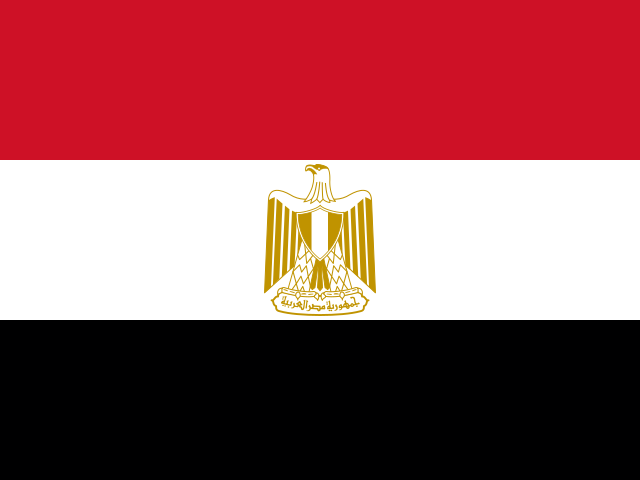 Egypt
Egypt
Egyptian dates before 664 BCE come from king-lists and astronomy, and references disagree by up to two centuries at the start: the unification is put at c. 3150 (World History Encyclopedia), 3100 (UCL), 2950 (UCLA Encyclopedia of Egyptology) or 2900 BCE (Britannica's low chronology). The Old Kingdom begins in 2686 (UCL), 2670 (UEE), 2649 (Metropolitan Museum) or 2543 (Britannica). The bar starts at the conventional 3100 BCE and fades back to 3150; the phase boundaries follow UCL, except the Middle Kingdom start (UEE, 2040) and the Second Intermediate start (Metropolitan Museum, 1650); each phase links the UEE's PeriodO definition. The end, Cleopatra's death in 30 BCE, is certain.
Before and after
In Egypt:Came after: Ancient Rome
Octavian made Egypt a Roman province in 30 BCE, after Cleopatra VII's death.
Meanwhile…
- Minoan civilization
 Europe ·
 Frescoes at Knossos show acrobats vaulting over the horns and backs of charging bulls, a ritual sport with no clear parallel elsewhere.
Compare - Maya civilization
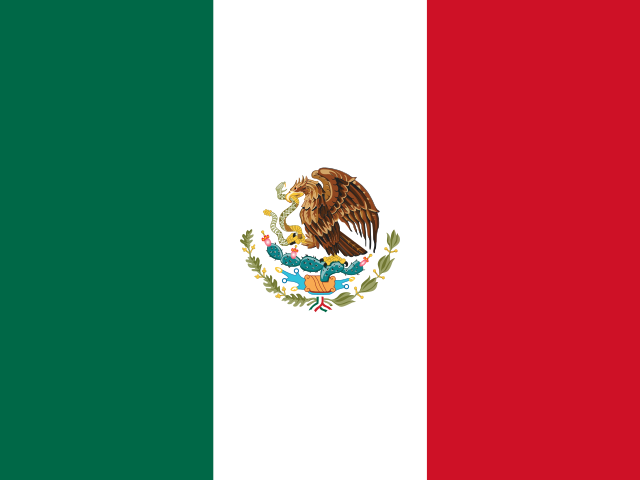
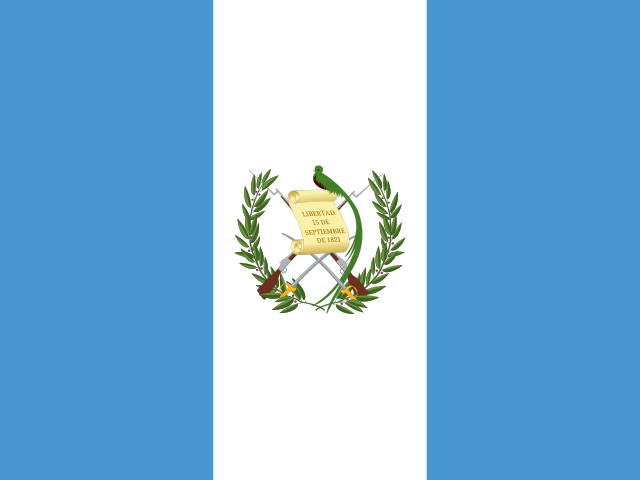 Mesoamerica · Longest-lasting here
The Maya Long Count calendar tracks days in an unbroken count from a mythical starting point in 3114 BCE.
Compare - Valdivia culture
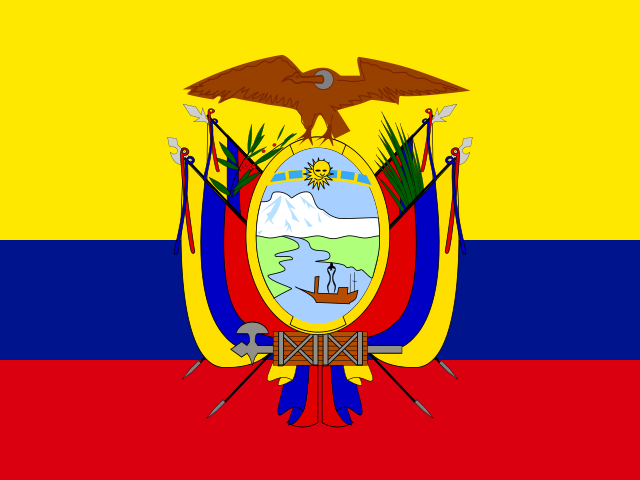 South America ·
 Valdivia potters shaped small clay "Venus" figures of women, each with a distinct hairstyle, no two exactly alike.
Compare - Shang dynasty商
 China ·
 Builders at Zhengzhou raised city walls of pounded earth, layer by layer; stretches still stand in the modern city.
Compare - Neolithic Britain
 Europe · Oldest here
The bluestones travelled further than the stones of any other prehistoric monument in Europe, roughly 200 km from Wales to Salisbury Plain.
Compare - Olmec civilization Mesoamerica ·
Olmec art repeats a half-human, half-jaguar infant face so often that archaeologists call it the "were-jaguar".
Compare
Three thousand years of kingdoms along the Nile, ruled by kings the Bible calls pharaohs: Narmer's united valley, the pyramid builders, the empire of Thutmose III and Ramesses II, Libyan, Nubian and Persian dynasties, then Alexander's Greek successors down to Cleopatra, whose death in 30 BCE made Egypt a Roman province. Its people called it Kemet, the black land of Nile silt (written km.t; the vowels are a modern guess), and its script stayed unreadable for 1,400 years until the Rosetta Stone gave it back.
Also alive at the same time
- Erlitou culture
- Shang dynasty
- Western Zhou
- Spring and Autumn period
- Warring States period
- Qin dynasty
- Han dynasty
- Valdivia culture
- Caral–Supe civilization
- Chavín culture
- Paracas culture
- Moche culture
- Nazca culture
- Maya civilization
- Olmec civilization
- Zapotec civilization
- Teotihuacan
- Neolithic Britain
- Minoan civilization
- Mycenaean Greece
- Ancient Rome
- Celtic Iron Age
- Etruscan civilization
- Ancient Greece