You are looking at
Goguryeo高句麗
East Asia & PacificHeartland today:  North Korea and
  South Korea
The traditional founding date, from the 12th-century Samguk sagi, is 37 BCE. The Library of Congress country study says an independent centralised kingdom had formed by 53 CE, and some scholars put the origins in the 2nd century BCE on archaeological grounds. Chinese state scholarship, notably the Northeast Project from 2002, treats Goguryeo as a local regime within Chinese history; Korean scholars and the South Korean government treat it as part of Korean history. This entry records its dates and events only.
Meanwhile…
- Moche culture
 South America ·
 Moche potters modelled ceramic portrait vessels so lifelike that individual faces can be recognised across different vessels.
Compare - Maya civilization
 Mesoamerica · Oldest here
The Maya Long Count calendar tracks days in an unbroken count from a mythical starting point in 3114 BCE.
Compare - Ancient RomeRoma
 Europe ·
 From 212 CE almost every free person in the empire, from a Briton to a Syrian, was a Roman citizen with the right to use Roman law.
Compare - Sogdia
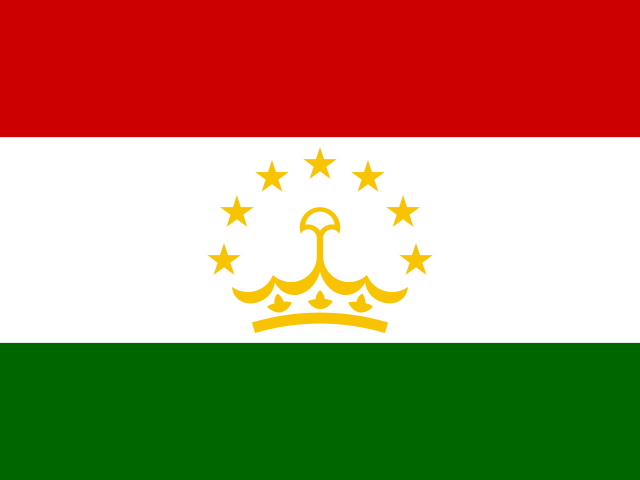 Middle East & Central Asia ·
 At Pendzhikent, excavated houses show that about a third of them had painted murals and carved wood.
Compare - Anuradhapura Kingdom
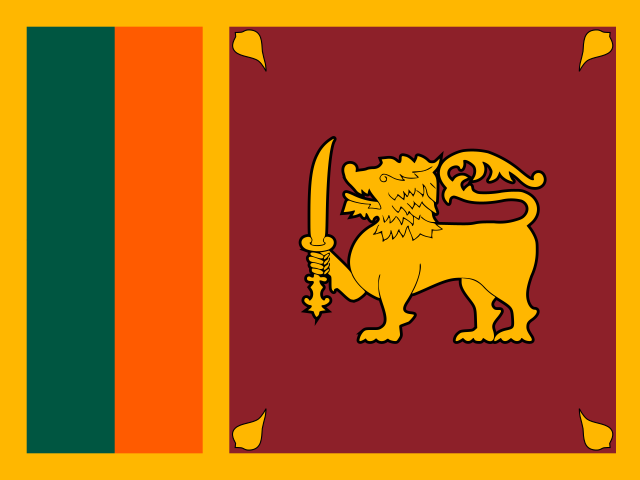 South Asia ·
 A cutting of the Bodhi tree, brought by Sanghamitta in the 3rd century BCE, was planted at Anuradhapura, where a tree believed to descend from it still stands.
Compare - Kingdom of Aksum
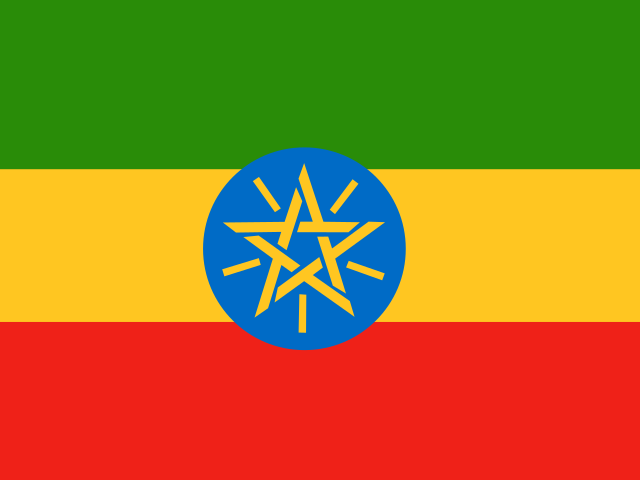
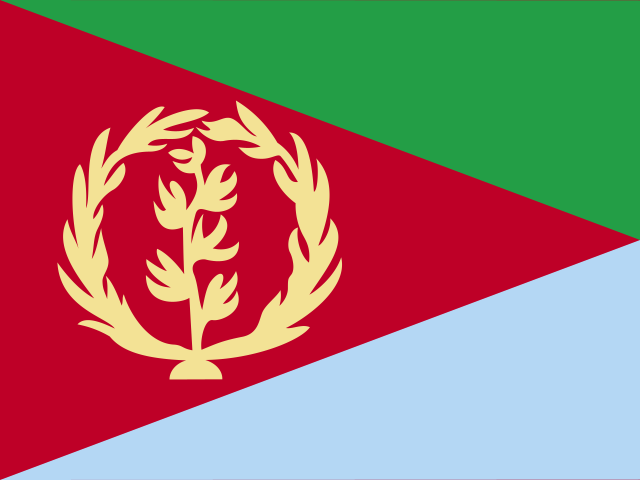 Africa ·
 The prophet Mani, who lived in the 3rd century CE, named Aksum among the four great kingdoms of the world.
Compare
Goguryeo rose along the Yalu River and, under Gwanggaeto (r. 391-413) and his son Jangsu, held northern Korea and much of Manchuria. It destroyed a Sui army at the Salsu River in 612 and held off a Tang army at Ansi in 645, then fell to Tang and Silla forces in 668. Its painted tombs survive.
Also alive at the same time
- Han dynasty
- Three Kingdoms
- Sui dynasty
- Tang dynasty
- Moche culture
- Nazca culture
- Tiwanaku
- Muisca
- Wari Empire
- Maya civilization
- Zapotec civilization
- Teotihuacan
- Ancient Rome
- Dacia
- Picts
- Visigothic Kingdom
- Anglo-Saxon England
- Ostrogothic Kingdom
- Merovingian Kingdom
- Kingdom of Gwynedd
- Lombard Kingdom
- Kingdom of Kush
- Kingdom of Aksum
- Sogdia
- Parthian Empire
- Nabataeans
- Sasanian Empire
- Umayyad Caliphate
- Anuradhapura Kingdom
- Kushan Empire
- Gupta Empire
- Yayoi period
- Xiongnu
- Funan
- Champa
- Baekje
- Kofun period and Yamato state
- Silla
Key events
According to the traditional account, Jumong founds GoguryeoDisputed
The date comes from the Samguk sagi, a 12th-century chronicle; the Library of Congress country study dates an independent centralised kingdom to 53 CE, and some scholars place the origins in the 2nd century BCE.
Also happening around
- Han dynastyChina
- Moche cultureSouth America
- Nazca cultureSouth America
- Maya civilizationMesoamerica
- Zapotec civilizationMesoamerica
- TeotihuacanMesoamerica
- Ancient RomeEurope
- DaciaEurope
- Ancient EgyptAfrica
- Kingdom of KushAfrica
- SogdiaMiddle East & Central Asia
- Parthian EmpireMiddle East & Central Asia
- NabataeansMiddle East & Central Asia
- Anuradhapura KingdomSouth Asia
- Yayoi periodEast Asia & Pacific
- XiongnuEast Asia & Pacific
- Mixtec civilizationMesoamerica (uncertain overlap)
- Etruscan civilizationEurope (uncertain overlap)
- Ancient GreeceEurope (uncertain overlap)
- Celtic Iron AgeEurope (uncertain overlap)
- ScythiansEurope (uncertain overlap)
- SillaEast Asia & Pacific (uncertain overlap)
Goguryeo takes Lelang, the last Chinese commandery on the Korean peninsula
Also happening around
- Moche cultureSouth America
- Nazca cultureSouth America
- Maya civilizationMesoamerica
- Zapotec civilizationMesoamerica
- TeotihuacanMesoamerica
- Ancient RomeEurope
- PictsEurope
- Kingdom of KushAfrica
- Kingdom of AksumAfrica
- SogdiaMiddle East & Central Asia
- Sasanian EmpireMiddle East & Central Asia
- Anuradhapura KingdomSouth Asia
- FunanEast Asia & Pacific
- BaekjeEast Asia & Pacific
- ChampaEast Asia & Pacific
- Kofun period and Yamato stateEast Asia & Pacific
- TiwanakuSouth America (uncertain overlap)
- Mixtec civilizationMesoamerica (uncertain overlap)
- Ghana EmpireAfrica (uncertain overlap)
- Kushan EmpireSouth Asia (uncertain overlap)
- SillaEast Asia & Pacific (uncertain overlap)
King Sosurim adopts Buddhism, introduced by the monk Shundao
Also happening around
- Moche cultureSouth America
- Nazca cultureSouth America
- Maya civilizationMesoamerica
- Zapotec civilizationMesoamerica
- TeotihuacanMesoamerica
- Ancient RomeEurope
- PictsEurope
- Kingdom of AksumAfrica
- SogdiaMiddle East & Central Asia
- Sasanian EmpireMiddle East & Central Asia
- Anuradhapura KingdomSouth Asia
- Gupta EmpireSouth Asia
- FunanEast Asia & Pacific
- BaekjeEast Asia & Pacific
- SillaEast Asia & Pacific
- ChampaEast Asia & Pacific
- Kofun period and Yamato stateEast Asia & Pacific
- TiwanakuSouth America (uncertain overlap)
- Mixtec civilizationMesoamerica (uncertain overlap)
- Ghana EmpireAfrica (uncertain overlap)
King Jangsu erects a stele for his father Gwanggaeto, listing the king's campaigns
Scholars read some lines of the inscription differently, notably those about Japan.
Sources
Also happening around
- Moche cultureSouth America
- Nazca cultureSouth America
- TiwanakuSouth America
- Maya civilizationMesoamerica
- Zapotec civilizationMesoamerica
- TeotihuacanMesoamerica
- Ancient RomeEurope
- PictsEurope
- Kingdom of AksumAfrica
- SogdiaMiddle East & Central Asia
- Sasanian EmpireMiddle East & Central Asia
- Anuradhapura KingdomSouth Asia
- Gupta EmpireSouth Asia
- FunanEast Asia & Pacific
- BaekjeEast Asia & Pacific
- SillaEast Asia & Pacific
- ChampaEast Asia & Pacific
- Kofun period and Yamato stateEast Asia & Pacific
- Mixtec civilizationMesoamerica (uncertain overlap)
- Visigothic KingdomEurope (uncertain overlap)
- Anglo-Saxon EnglandEurope (uncertain overlap)
- Kingdom of GwyneddEurope (uncertain overlap)
- Ghana EmpireAfrica (uncertain overlap)
King Jangsu moves the capital from Gungnae to Pyongyang
Sources
Also happening around
- Moche cultureSouth America
- Nazca cultureSouth America
- TiwanakuSouth America
- Maya civilizationMesoamerica
- Zapotec civilizationMesoamerica
- TeotihuacanMesoamerica
- Ancient RomeEurope
- PictsEurope
- Visigothic KingdomEurope
- Kingdom of AksumAfrica
- SogdiaMiddle East & Central Asia
- Sasanian EmpireMiddle East & Central Asia
- Anuradhapura KingdomSouth Asia
- Gupta EmpireSouth Asia
- FunanEast Asia & Pacific
- BaekjeEast Asia & Pacific
- SillaEast Asia & Pacific
- ChampaEast Asia & Pacific
- Kofun period and Yamato stateEast Asia & Pacific
- Mixtec civilizationMesoamerica (uncertain overlap)
- Anglo-Saxon EnglandEurope (uncertain overlap)
- Kingdom of GwyneddEurope (uncertain overlap)
- Ghana EmpireAfrica (uncertain overlap)
General Eulji Mundeok floods the Salsu River and destroys the crossing Sui army
Also happening around
- Sui dynastyChina
- Moche cultureSouth America
- Nazca cultureSouth America
- TiwanakuSouth America
- Wari EmpireSouth America
- MuiscaSouth America
- Maya civilizationMesoamerica
- Zapotec civilizationMesoamerica
- Ancient RomeEurope
- PictsEurope
- Visigothic KingdomEurope
- Anglo-Saxon EnglandEurope
- Kingdom of GwyneddEurope
- Merovingian KingdomEurope
- Lombard KingdomEurope
- SogdiaMiddle East & Central Asia
- Sasanian EmpireMiddle East & Central Asia
- Anuradhapura KingdomSouth Asia
- BaekjeEast Asia & Pacific
- SillaEast Asia & Pacific
- ChampaEast Asia & Pacific
- Kofun period and Yamato stateEast Asia & Pacific
- TeotihuacanMesoamerica (uncertain overlap)
- Mixtec civilizationMesoamerica (uncertain overlap)
- Kingdom of AksumAfrica (uncertain overlap)
- Ghana EmpireAfrica (uncertain overlap)
- FunanEast Asia & Pacific (uncertain overlap)
A Tang army led by Emperor Taizong fails to take Ansi fortress and withdrawsDisputed
The World History Encyclopedia dates the siege to 644; the New World Encyclopedia dates Taizong's invasion to 645, the year this entry uses. The World History Encyclopedia names the Goguryeo commander as Yang Manchun and gives a three-month siege.
Also happening around
- Tang dynastyChina
- Moche cultureSouth America
- Nazca cultureSouth America
- TiwanakuSouth America
- Wari EmpireSouth America
- MuiscaSouth America
- Maya civilizationMesoamerica
- Zapotec civilizationMesoamerica
- Ancient RomeEurope
- PictsEurope
- Visigothic KingdomEurope
- Anglo-Saxon EnglandEurope
- Kingdom of GwyneddEurope
- Merovingian KingdomEurope
- Lombard KingdomEurope
- SogdiaMiddle East & Central Asia
- Anuradhapura KingdomSouth Asia
- BaekjeEast Asia & Pacific
- SillaEast Asia & Pacific
- ChampaEast Asia & Pacific
- Kofun period and Yamato stateEast Asia & Pacific
- TeotihuacanMesoamerica (uncertain overlap)
- Mixtec civilizationMesoamerica (uncertain overlap)
- Kingdom of AksumAfrica (uncertain overlap)
- Ghana EmpireAfrica (uncertain overlap)
- Sasanian EmpireMiddle East & Central Asia (uncertain overlap)
- FunanEast Asia & Pacific (uncertain overlap)
Tang and Silla forces defeat Goguryeo, and King Bojang is taken to China
Sources
Also happening around
- Tang dynastyChina
- Moche cultureSouth America
- TiwanakuSouth America
- Wari EmpireSouth America
- MuiscaSouth America
- Maya civilizationMesoamerica
- Zapotec civilizationMesoamerica
- Ancient RomeEurope
- PictsEurope
- Visigothic KingdomEurope
- Anglo-Saxon EnglandEurope
- Kingdom of GwyneddEurope
- Merovingian KingdomEurope
- Lombard KingdomEurope
- SogdiaMiddle East & Central Asia
- Umayyad CaliphateMiddle East & Central Asia
- Anuradhapura KingdomSouth Asia
- SillaEast Asia & Pacific
- ChampaEast Asia & Pacific
- Nazca cultureSouth America (uncertain overlap)
- TeotihuacanMesoamerica (uncertain overlap)
- Mixtec civilizationMesoamerica (uncertain overlap)
- Toltec civilizationMesoamerica (uncertain overlap)
- Kingdom of AksumAfrica (uncertain overlap)
- Ghana EmpireAfrica (uncertain overlap)
- Kofun period and Yamato stateEast Asia & Pacific (uncertain overlap)