Korean War
- China calls it 抗美援朝战争 (War to Resist US Aggression and Aid Korea; in Chinese usage, the period from the Volunteers' entry in October 1950 to the armistice)
- North Korea calls it 조국해방전쟁 (Fatherland Liberation War)
- South Korea calls it 한국전쟁 (Korean War; also called the 6·25 War, after its first day)
See this year on the world timeline
Sides
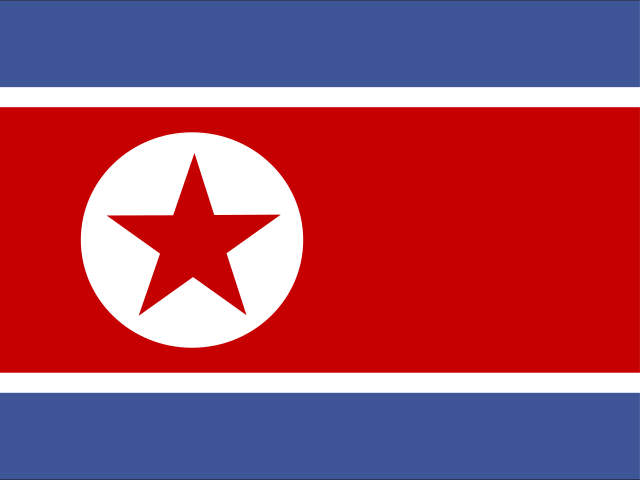 North Korea, Chinese People's Volunteer Army, and Soviet Union
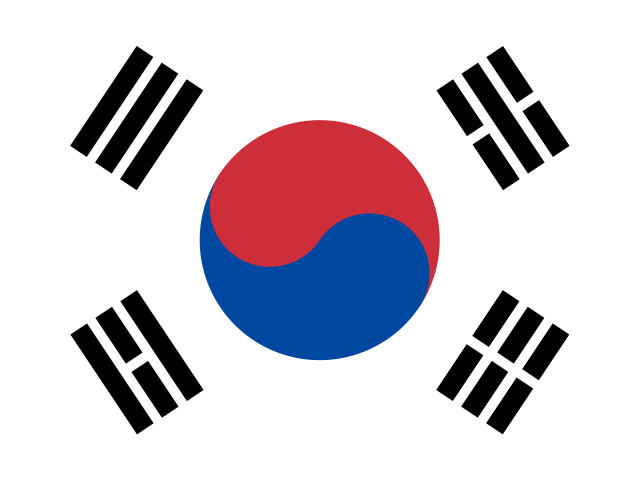 South Korea,
 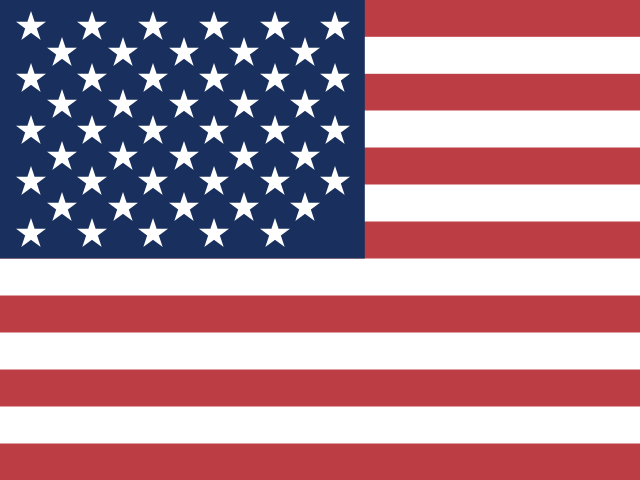 United States,
 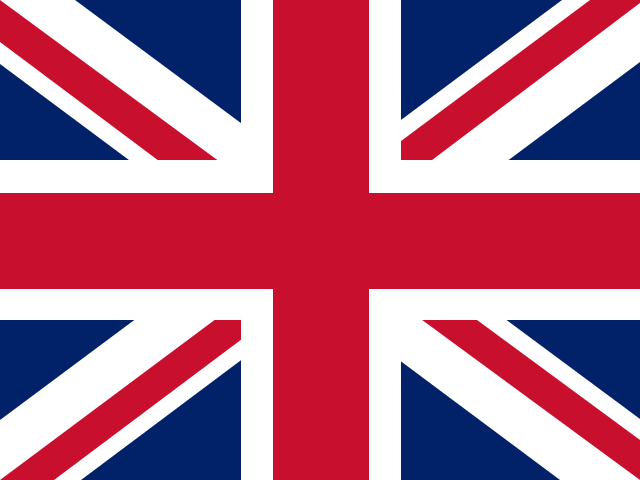 United Kingdom,
  Australia,
  Netherlands,
  Canada,
  France,
 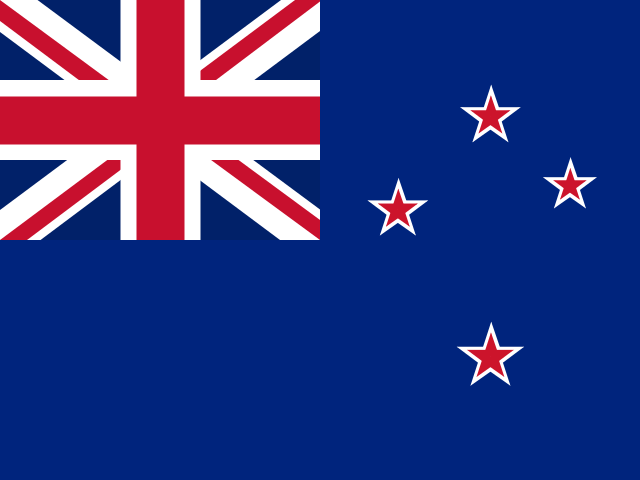 New Zealand,
 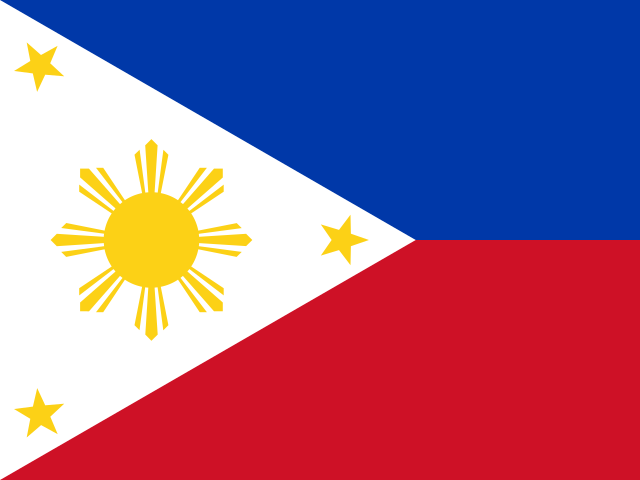 Philippines,
 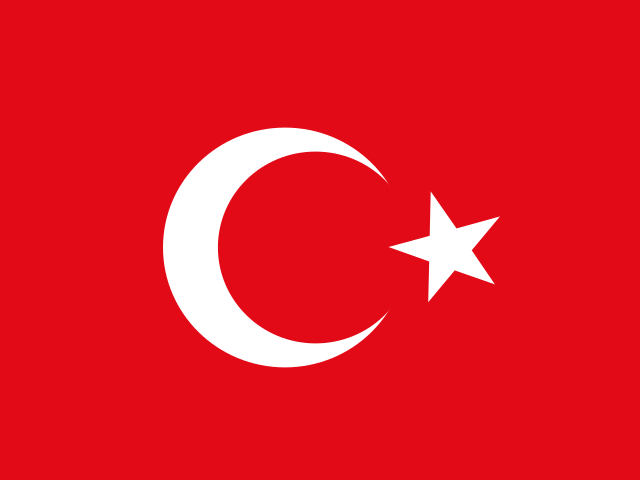 Türkiye,
 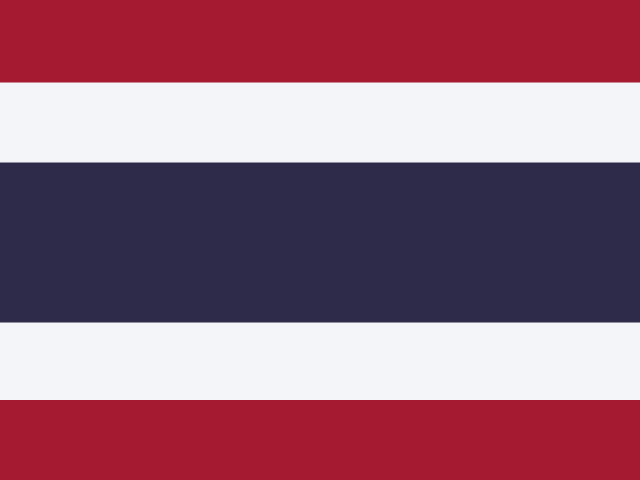 Thailand,
  South Africa,
  Greece,
  Belgium,
  Luxembourg,
  Ethiopia, and
  Colombia
 China
China Russia
What happened
Korea was divided at the 38th parallel in 1945 into Soviet and US occupation zones, and by 1948 had two rival states. On 25 June 1950 North Korea's army attacked across the parallel, took Seoul and drove South Korean and US forces back to a perimeter around Pusan. The UN Security Council called on members to help South Korea, and sixteen countries sent combat troops under a US-led United Nations Command. After a landing at Inchon in September, UN forces pushed north towards the Chinese border. From October the Chinese People's Volunteer Army crossed the Yalu and drove them back, retaking Seoul in January 1951; the Soviet Union supplied arms, and Soviet pilots flew in combat while Moscow denied it. From mid-1951 the front settled near the 38th parallel while armistice talks stalled, chiefly over the return of prisoners. The armistice signed at Panmunjom on 27 July 1953 stopped the fighting and set a demilitarised zone. No peace treaty followed.
Outcome: An armistice, not a peace treaty, ended the fighting on 27 July 1953, with the front line close to the 38th parallel; Korea stayed divided.
Key events
Leaders
- Kim Il Sung · Leader of North Korea · North Korea, the Chinese People's Volunteer Army and the Soviet Union
- Peng Dehuai · Commander of the Chinese People's Volunteer Army · North Korea, the Chinese People's Volunteer Army and the Soviet Union
- Mao Zedong · Chairman of the Chinese Communist Party and of the Central People's Government · North Korea, the Chinese People's Volunteer Army and the Soviet Union
- Syngman Rhee · President of South Korea · South Korea and the United Nations Command
- Harry S. Truman · US president, to January 1953 · South Korea and the United Nations Command
- Douglas MacArthur · UN commander, 1950–1951 · South Korea and the United Nations Command
- Matthew Ridgway · Eighth Army commander, then UN commander, 1951–1952 · South Korea and the United Nations Command
- Mark W. Clark · UN commander; signed the armistice · South Korea and the United Nations Command
Deaths
Death tolls are estimates and often contested. Each is a range from its sources; a figure one party gives is marked as theirs.
Military deaths · Chinese People's Volunteer Army
- 197,653according to PRC Ministry of Civil Affairs and PLA General Political Department (confirmed 2014)
Volunteers the PRC lists by name as "martyrs", including those killed south of the 38th parallel; the figure was repeated on the 70th anniversary in 2020.
- 183,108according to PRC civil affairs register, as cited by Maj. Gen. Xu Yan (2010)
Xu Yan also gave about 114,000 killed in action or accidents, 25,621 missing and about 70,000 dead of wounds, illness and other causes.
Military deaths · US armed forces
- 36,574according to US Department of Veterans Affairs
33,739 battle deaths and 2,835 other deaths in the theatre. The National Army Museum gives nearly 37,000 killed.
Military deaths · South Korean armed forces
- 137,899according to South Korean Ministry of National Defense
A further 24,495 were reported missing.
Civilian deaths · Korean civilians, North and South
- 1,600,000 – 3,000,000
Only rough estimates exist: Bruce Cumings gives 2 million, Guenter Lewy 2 to 3 million, and a systematic review 1.6 to 3 million dead or missing. The National Army Museum gives an estimated 2 million.
Sources
- Wikipedia (English). "Korean War."
- National Army Museum (UK). "Korean War."
- Office of the Historian, U.S. Department of State. "Korean War and Japan's Recovery." Milestones in the History of U.S. Foreign Relations.
- Wikipedia (English). "United Nations Forces in the Korean War."
- Wikipedia (English). "Korean Armistice Agreement."
- Wikipedia (español). "Guerra de Corea."
- Wikipedia (中文). "朝鲜战争."
- Xinhua (新华社). "抗美援朝烈士最新确认为197653名." 29 October 2014, via Sina.
- CCTV (央视网). "抗美援朝197653位牺牲烈士 记住他们!" 23 October 2020.
- China.org.cn. "180,000 Chinese soldiers killed in Korean War." 28 June 2010.